

Glacier National Park
Updated: Mar 14
Going-to-the-Sun Road
Glacier makes its presence known early. The land rises and the mountains begin to take up more of the windshield than the sky. By the time the entrance sign comes into view, it is clear this is a place governed by weather, not preference.
The upper stretches of Going to the Sun near Logan Pass do not always cooperate. Snow can hold the pass well into the season, and closures often stop vehicles far below the divide. When that happens, the route continues on foot or by bike, and the day changes shape.


Without engines, the road widens. Conversation becomes easy. Runoff threads through spillways cut into the pavement, and the cliffs reveal how narrow the ledges truly are. What feels dramatic from the driver’s seat settles into proportion on foot.
Access shifts year to year. Some seasons require timed-entry reservations or vehicle permits, and policies evolve. Construction, avalanche risk, and snowpack often determine how far anyone gets. Do the research before arriving, the same way you would before stepping into any landscape where you are the visitor, not the authority.
Even when open, the road shows only a fraction of the park. More than seven hundred miles of trail leave from valleys and passes and disappear into terrain most visitors never reach. Glacier continues north into Waterton Lakes National Park, forming one continuous system of rock, water, and weather.
Wildlife is part of daily travel here. Bears feed in the same drainages hikers use to move between trailheads. Carry bear spray somewhere accessible and understand how to deploy it. Space and patience usually resolve the moment.


Be careful near water. Snowmelt keeps temperatures low, currents strong, and rocks unsettled. It deserves the same respect given to the animals that live here. Each season, the majority of visitors who do not make it home are taken by drowning. Step deliberately.
Walking toward the pass from the St. Mary Entrance, the elevation builds gradually, then all at once. Switchbacks stack overhead. Wind slides down the faces of the peaks. The scale clarifies how ambitious the road is and how small a vehicle becomes against the walls that hold it.
Where someone enters the park shapes the introduction. The west side gathers around Lake McDonald, long and deep, its shoreline known for colored stones that surface when the water settles. Lodges, historic structures, and dense forest make this entrance feel enclosed and immediate.

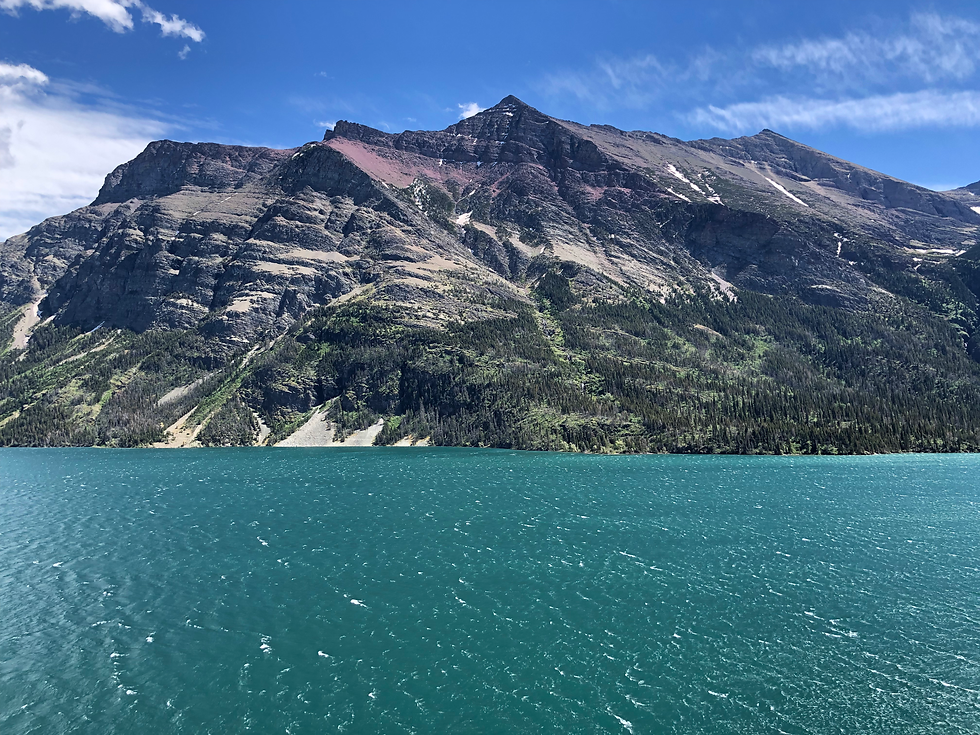
Approaching from the east through St. Mary opens everything up. St. Mary Lake runs broad beneath exposed slopes, with Wild Goose Island set forward in the water, close enough to anchor the view.

This side of the park gives weather room to work. Clouds build, break, and reform against the peaks, changing the light minute by minute. A ridgeline that looks flat can turn sharp as sun cuts through. Color comes and goes. What you are looking at rarely holds still for long.
Other doors offer their own tempo. Many Glacier leans into vertical relief and wildlife corridors. Two Medicine carries a quieter rhythm shaped by water and open ground. The North Fork near Polebridge trades pavement for dust and a sense of remove. Each approach rearranges expectations before the first step is taken.
Lodging requires intention. Rooms inside the park are limited and often reserved well ahead of peak months, and campground availability follows the same pattern. Sites fill quickly, whether reservable or first come. Whitefish and Kalispell provide broader options and services within reach of the west entrance depending on traffic. Early starts make parking and trail access easier to manage, and they offer one of the best windows to watch wildlife move through the valleys.
People arrive prepared to finish the drive. Conditions sometimes rewrite the plan.
Meeting the place at human speed changes the measure of distance. The terrain has time to register, and the pull of the next overlook loosens.
The road provides passage, not completion.
There will always be more here than one trip can hold.


